
Which Solana Wallet for DeFi in 2026
Phantom, Solflare, Jupiter Mobile, Backpack, and Ledger compared for staking, swaps, and yield on Solana - which wallet fits which kind of user in 2026.

TL;DR. Pick Phantom for general DeFi, Solflare for serious SOL staking with validator control, Jupiter Mobile for active trading, and Backpack if you switch between a CEX and DeFi often. Pair any of them with a Ledger for large holdings. The wallet stays your custody layer; staking happens elsewhere.
Choosing the right Solana wallet for DeFi depends on the use case: staking, swaps, yield farming, or all of the above. This guide breaks down the major options and when each one makes sense.
Quick answer: Most users should start with Phantom. It does everything. But for serious staking or active trading, there are better specialized options.
| Wallet | Best For | Key Strength |
|---|---|---|
| Phantom | General use | Does everything, massive ecosystem |
| Solflare | Stakers | Detailed validator selection |
| Jupiter Mobile | Active traders | Best swap rates, DCA built-in |
| Backpack | CEX/DeFi hybrid users | Wallet + exchange unified |
| Squads | DAOs/teams | Multisig treasury management |
| Ledger | Large holdings | Hardware-level security |
Phantom: the default choice
Phantom has around 17 million monthly active users and handles $25 billion in self-custodied assets. It started as Solana-only but now supports Ethereum, Bitcoin, Polygon, Base, and more.
What matters for DeFi:
- Built-in perpetuals trading via Hyperliquid (up to 40x leverage on BTC, ETH, SOL)
- Cross-chain swaps work directly in-app without bridge hopping
- Transaction previews show exactly what will happen before signing (Blowfish acquisition)
- Spam token detection auto-hides malicious airdrops
The tradeoff: Phantom does everything reasonably well, nothing exceptionally. Users who stake significant SOL and care about validator selection often find the staking interface too basic compared to Solflare.
Solflare: for stakers who want control
Solflare is backed by the Solana Foundation and focuses exclusively on Solana. No multi-chain support, but that focus shows in the details.
Why stakers prefer it:
- Detailed validator selection with commission rates, performance history, and decentralization scores
- Priority fee controls when the network gets congested
- Mobile Ledger support (hardware wallet connection on phone)
- Hot wallet isolation to separate main holdings from DeFi interactions
Best for: Users staking $50k+ in SOL who care about validator selection. For simple stake-and-forget, Phantom works fine.
The tradeoff: Solana only. Multi-chain users need a second wallet.
Backpack: wallet and exchange in one
Built by the Mad Lads team, Backpack takes a different approach. The wallet and exchange share infrastructure, enabling instant deposits, unified balances, and gasless swaps.
What makes it different:
- xNFT support: NFTs that run code (games, tools, apps inside the wallet)
- No separate exchange account needed. Move between self-custody and trading instantly
- Fee discounts for Mad Lads NFT holders
Best for: Active traders who move between CEX and DeFi frequently. The unified experience reduces friction.
The tradeoff: Smaller user base means less battle-tested than Phantom. Consider limiting exposure for large amounts.
Jupiter Mobile: trading-first wallet
Jupiter Mobile has over 1 million users and a 4.9/5 App Store rating. Built by the team behind Solana's largest DEX aggregator, the trading features are best-in-class.
What makes it different:
- Best swap rates. Routes across every Solana DEX automatically
- Trigger orders and recurring swaps built in (DCA without third-party tools)
- Apple Pay onboarding and Apple ID login. No seed phrase required to start
- Web3 browser with security scans on every transaction
- Self-custodial despite the simplified onboarding
Best for: Active mobile traders. For users who mostly hold and stake, it may be overkill.
The tradeoff: Newer than Phantom and Solflare, less proven over time.
Squads: for teams, not individuals
Squads is the multisig protocol securing over $10 billion on Solana. It is designed for DAOs, companies, and treasuries that need multiple signatures to move funds.
Features for teams:
- Configurable signing thresholds (2-of-3, 3-of-5, etc.)
- Spending limits and time locks
- Role-based permissions and sub-accounts
- Audited by OtterSec and the Solana Foundation
Best for: DAO treasuries and company funds. The only serious multisig option on Solana. Not relevant for personal use.
Ledger: hardware security for serious holdings
A hardware wallet keeps private keys offline. Phishing sites cannot steal what they cannot reach.
How it works with Solana DeFi:
- Connect to Phantom or Solflare for daily use. Software interface with hardware-level security
- Enable blind signing in Ledger settings (required for most dApps)
- SOL management happens through the software wallet, not Ledger Live
Models: Nano S Plus ($79) is the entry option. Nano X ($149) adds Bluetooth. Stax ($399) has a touchscreen.
Best for: Any amount worth protecting. Many users keep a hot wallet for daily trading and a Ledger for long-term holdings.
Using these wallets with Hubra
All of these wallets connect to Hubra when it's time to stake. The wallet stays your custody layer; Hubra handles the staking - SOL and USDC - with yield that compounds quietly in the background.
New to Solana? Our beginner's guide to using Solana walks through wallet setup and your first stake. If you already hold SOL, jump straight to how to stake SOL.
Pick whichever wallet fits the daily workflow. When you're ready, stake SOL natively, mint raSOL, or earn on USDC.
Frequently asked questions
Which Solana wallet is safest?
A Ledger hardware wallet connected to Phantom or Solflare. Keys stay offline, so phishing attacks cannot steal them. For software-only options, Phantom and Solflare are both audited and widely used.
Can you use multiple Solana wallets?
Yes. Many users run Phantom or Jupiter Mobile for daily transactions and a Ledger for long-term holdings. The same seed phrase can be imported into multiple wallets to test different interfaces.
What is the best wallet for Solana staking?
Solflare for users who want to pick their own validator and see detailed performance metrics. Phantom for those who just want to stake without worrying about validator selection.
Do Solana wallets charge fees?
The wallets themselves are free. Users pay Solana network fees (around $0.01 per transaction) plus DEX fees when swapping (typically 0.05-0.30%). Phantom and Backpack earn revenue from swap routing, built into the rates shown.
Is Phantom wallet safe in 2026?
Phantom is widely considered safe. It has 17 million monthly users, backing from Sequoia and Paradigm ($3B valuation), acquired security company Blowfish, and has had no major breaches. That said, no hot wallet is as secure as a hardware wallet. Use Ledger for large amounts.
Last updated: March 2026
 Education
What You Can Do With raSOL in Solana DeFi
Your staked SOL does not have to sit still. Five ways to put raSOL to work across Solana DeFi, from Kamino loops to Meteora liquidity, and the risks of each.
 Education
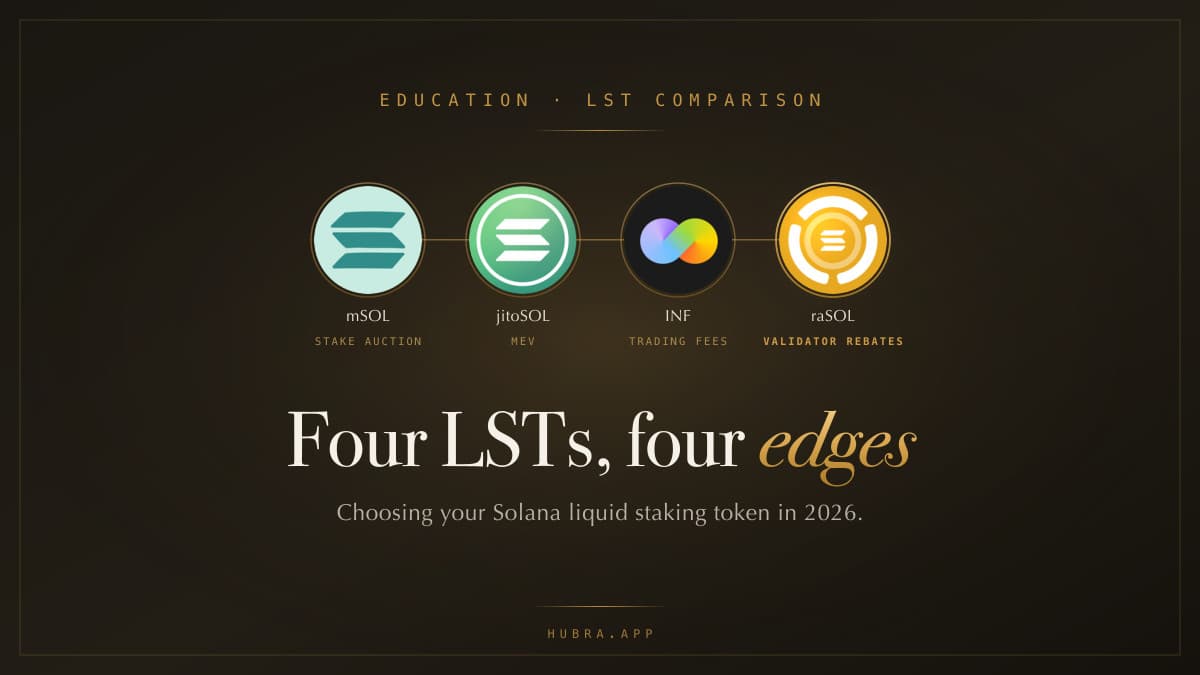
raSOL vs JitoSOL vs mSOL vs INF: Solana LST Compared
JitoSOL leads on liquidity, mSOL on its validator stake auction, INF on diversified fee-boosted yield, and raSOL rebates the earnings of a single long-running validator, with instant exit. Here is how the major Solana LSTs compare in 2026.
 Education
How to Use Solana Safely: A Beginner's Guide (2026)
From zero wallet to your first stake, in five clear steps. A practical, measured walkthrough of how to use Solana safely - wallet, seed phrase, buying SOL, spotting scams, and earning your first rewards.