
Solana's new 1 SOL minimum to stake, explained
Solana's stake program now needs at least 1 SOL to open a new native stake account. Existing stake is untouched. Here is what SIMD-0490 changed.
TL;DR. Solana raised the minimum delegation for a new native stake account from 1 lamport to 1 SOL under a change called SIMD-0490. Existing stake is untouched. The change is about keeping account creation sane as Solana lowers rent costs, not about your yield. If you hold less than 1 SOL and still want to earn, liquid staking and pooled staking are not bound by this floor.
If you stake SOL, or you were about to, there is a small but real change worth knowing about. Solana's stake program now sets a hard floor on how little you can put into a new native stake account. This post explains what SIMD-0490 changed, why the network did it, who it affects, and what to do if you hold less than 1 SOL.
How much SOL do you need to stake?
The short answer depends on how you stake:
| If you want to... | Minimum SOL | Why |
|---|---|---|
| Open a new native stake account | 1 SOL | Set by SIMD-0490, live on mainnet since 18 June 2026 |
| Liquid stake (e.g. raSOL) | A small fraction of a SOL | Pooled staking is not bound by the native floor |
| Stake through a pool | A small fraction of a SOL | You hold a token, not a personal stake account |
| Keep an existing delegation | No change | The rule is forward-looking only |
So if you hold 1 SOL or more and want a direct native delegation, you are clear. If you hold less than 1 SOL, liquid staking is the straightforward way to earn staking rewards without hitting the new floor. The rest of this post explains the change and the reasoning behind it.
What changed under SIMD-0490?
SIMD-0490, titled "Upgrade BPF Stake Program to v5.0.0," raises the minimum delegation for a new native stake account from 1 lamport to 1 SOL. A lamport is the smallest unit of SOL, one billionth of a coin, so the old floor was effectively no minimum at all. The new floor is a whole token.
The proposal was authored under the name Hanako Mumei and created on 2026-03-09. It activated on Solana mainnet on June 18, 2026, so the 1 SOL floor is now in effect: every new native stake account created from that date forward must hold at least 1 SOL.
The rule is forward-looking. It governs the creation of new stake accounts and does nothing to delegations that already exist.
Does this affect my existing stake?
No. If you already have SOL delegated, including an account below 1 SOL, nothing changes. SIMD-0490 only applies to stake accounts created after it took effect. Your current delegation keeps earning, you do not need to top it up, and you do not need to take any action.
The proposal is explicit that merging stake accounts is still allowed even when the destination account does not rise above 1 SOL. So consolidation of older, smaller accounts remains possible.
Why did Solana add a minimum to stake?
The short version: it is plumbing for a larger cleanup, not a change to staking economics.
Solana has been working to reduce rent, the cost of storing data on-chain, by lowering the per-byte charge. As that cost falls, it gets cheaper to create accounts of all kinds, including stake accounts. A near-zero stake minimum combined with cheap account creation is a recipe for database bloat: large numbers of tiny, spam-like stake accounts that every validator has to track.
The proposal describes the 1 SOL minimum as a "medium-firm blocker on rent reduction," meaning the network does not want the total cost to open a stake account to drift toward nothing. Setting a sensible floor now keeps the system clean as rent comes down. The team also considered lower options, including 0.1 SOL, 0.001 SOL, and the current rent-exemption threshold, before settling on 1 SOL.
Importantly, this is not a disinflation or reward change. If you want the story on where staking yields are heading, that is a separate topic covered in our piece on staking rewards and disinflation.
How much stake is actually affected?
Very little, by design. According to the proposal, stake accounts below 1 SOL collectively account for about 0.02% of active stake on the network. In other words, almost all real staked SOL sits in accounts well above the new floor. The change targets future account creation and network housekeeping, not the large delegations that secure the chain today.
Alongside the minimum, the v5.0.0 upgrade folds in routine fixes: it makes several sysvar inputs optional, which trims transaction size, and rewrites the stake "split" logic to fix longstanding bugs. These are maintenance items, not user-facing features.
What if I hold less than 1 SOL?
This is the practical question for smaller holders. Native staking now has a 1 SOL door. But native stake accounts are only one way to earn staking rewards on Solana, and the others are not bound by SIMD-0490.
When you use liquid staking or a stake pool, you are not opening a personal stake account. The pool holds large stake accounts on the back end, and you hold a token that represents your share. Because the 1 SOL minimum is a rule about individual native stake accounts, it does not apply to the pool's users. The pool's own minimum is set by each protocol and is usually a small fraction of a SOL.
| Path | Subject to the 1 SOL minimum? | Good for |
|---|---|---|
| Native staking | Yes, for new accounts | Cleanest custody, you pick the validator |
| Liquid staking | No | Small balances, instant exit, DeFi use |
| Pooled staking | No | Small balances, automatic validator spread |
| USDC staking | Not applicable | Earning on dollars, not SOL |
If you hold a fraction of a SOL and want exposure to staking rewards, liquid staking is the straightforward route. You can read the full breakdown in our guide to liquid staking on Solana.
What stakers should do now
For most people, the answer is nothing. Here is the short checklist.
If you already stake, there is no action required. Your existing delegation is unaffected, including accounts under 1 SOL.
If you are opening a new native stake account, plan for at least 1 SOL per account. Leave a little extra for transaction fees so the delegation clears the floor cleanly.
If you hold less than 1 SOL and want to earn, use liquid staking or a stake pool instead of a new native account. These are not bound by the minimum.
If you have several small old accounts, you can still merge them. Consolidation is allowed even when the result stays below 1 SOL.
This change sits alongside Solana's larger consensus work, including the Alpenglow upgrade. Taken together, the theme is the same: a cleaner, faster base layer, with staking mechanics that stay stable for the people using them.
This article is for educational purposes only and is not financial advice. Verify on-chain details against primary sources before acting.
 Education
Native vs Liquid Staking on Solana: Which Is Better in 2026?
Native staking and liquid staking both earn SOL rewards, but they trade off custody, liquidity, and risk very differently. Here is a plain comparison and a simple way to choose.
 Education
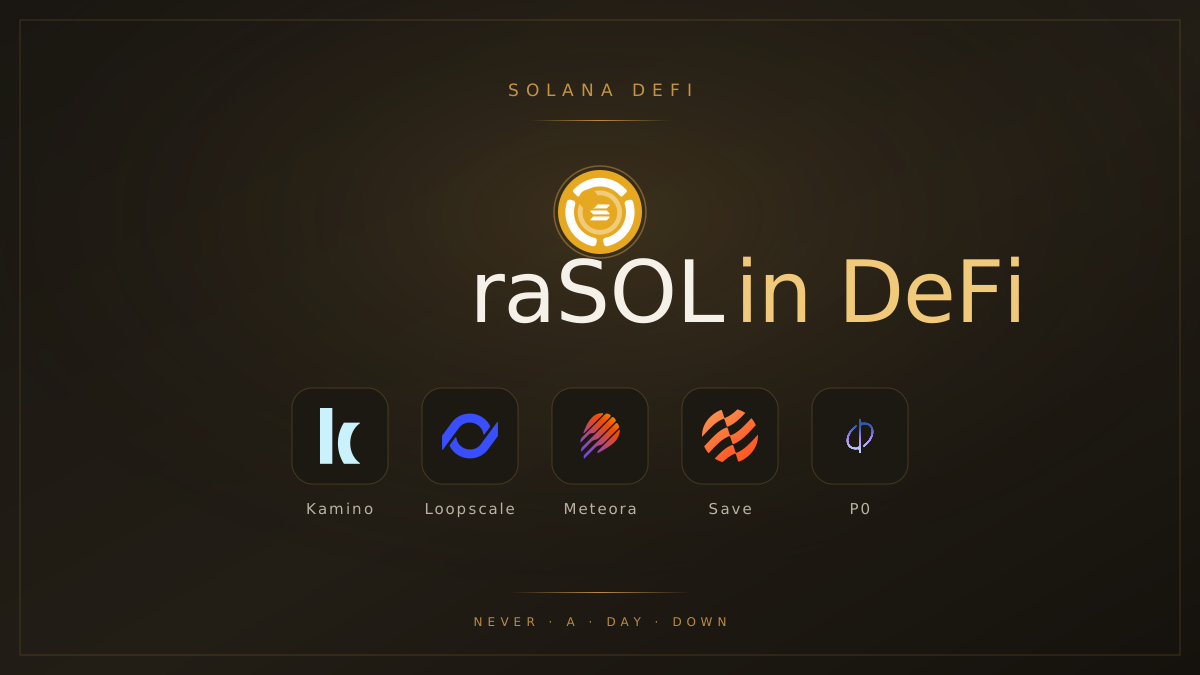
What You Can Do With raSOL in Solana DeFi
Your staked SOL does not have to sit still. Five ways to put raSOL to work across Solana DeFi, from Kamino loops to Meteora liquidity, and the risks of each.
 Education
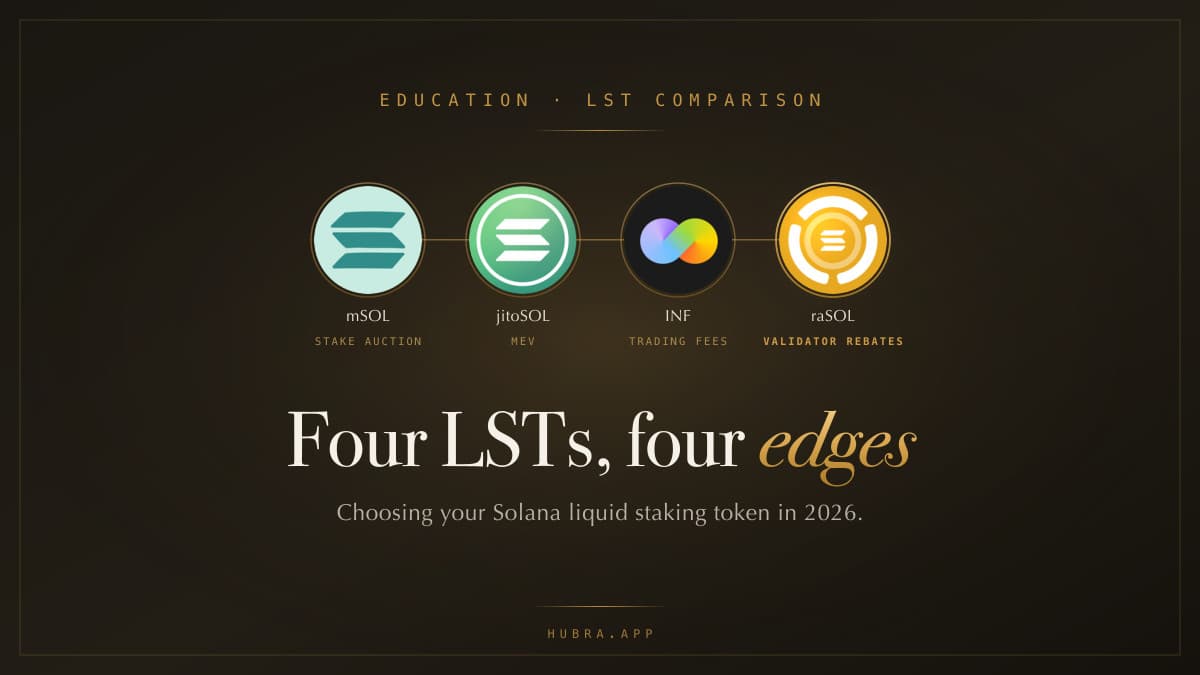
raSOL vs JitoSOL vs mSOL vs INF: Solana LST Compared
JitoSOL leads on liquidity, mSOL on its validator stake auction, INF on diversified fee-boosted yield, and raSOL rebates the earnings of a single long-running validator, with instant exit. Here is how the major Solana LSTs compare in 2026.