
Current Solana Staking APY in Late 2026: What September Changed
Looking up current Solana staking APY after September? The number still tracks inflation minus commission, plus any routed MEV. Sept 28 did not flip mainnet Alpenglow, and faster disinflation is still gated.
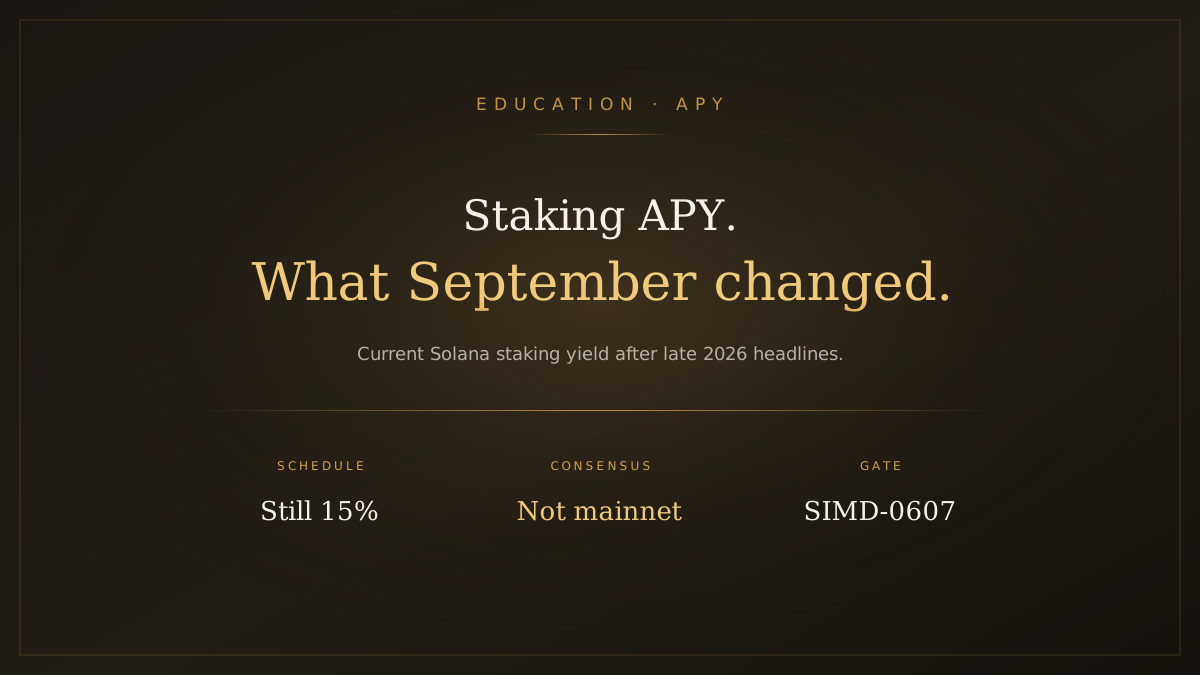
TL;DR. Current Solana staking APY in late 2026 still means inflation − commission ± any routed MEV. Late September moved the consensus story on public test clusters; it did not flip mainnet Alpenglow, and it did not cut epoch yields. SGP-0002 remains a mandate for faster disinflation. The live cut still waits on the SIMD-0607 yield gate. For wallet anatomy see how staking rewards work. For curve math see disinflation.
If you searched solana staking apy 2026 or current sol staking apy 2026 after the late-September headlines, you probably want one answer: did the number change? Here is the staker-facing read without inventing live APYs or treating proposals as already-live cuts.
What "current Solana staking APY" still means
APY on Solana is not a fixed coupon. The number you see on a dashboard is a snapshot of:
| Layer | What moves it |
|---|---|
| Inflation schedule | Protocol issuance path (existing disinflation toward the long-term floor) |
| Stake participation | Rewards shared among active stake |
| Validator performance | Missed votes shrink the share for that epoch |
| Commission | Operator cut of inflation rewards |
| Block / MEV share | Only if your operator or LST pool routes it |
Native stake credits inflation (after commission) into the stake account. Liquid tokens such as raSOL surface the same underlying path as redemption-rate growth. Pool overhead can make the net rate a touch different from a pure native delegation. The protocol inflation path is the same.
We do not invent Hubra APYs in this journal. For live figures, check the Hubra app or GET /api/v1/strategies/sol-native-stake. Docs: native staking, liquid staking. Product pages: liquid stake, staking mechanics.
What September actually changed
Two tracks moved in late September. Only one is consensus. Neither is a live APY cut on mainnet.
Alpenglow on public test clusters, not mainnet
Anza reported Alpenglow live on Solana testnet around 24 September 2026, with the handoff at slot 444625255: Alpenglow genesis formed and TowerBFT retired on that cluster. About a day later, the same handoff completed on Anza's public developer cluster at slot 504148999. On those clusters, finality runs under Votor and votes have moved off-chain.
Mainnet-beta still runs TowerBFT. Anza has described an observation period before any mainnet-beta migration. There is no public mainnet activation date in Anza's statements. Agave release windows that resume feature activations (including a November schedule entry) are windows, not an Alpenglow mainnet date. Do not read a calendar row as a consensus flip.
For the validator / staker checklist, see Alpenglow activation September 2026. This page is the APY question, not that checklist.
Consensus is not the staking APY formula
Alpenglow changes how the network finalizes blocks and how validators vote. It does not by itself rewrite inflation issuance or the stake-reward formula. A staker who conflates "faster finality on a test cluster" with "my epoch APY moved" is mixing tracks.
So for current sol staking apy 2026 after September: the headline news was consensus progress on non-mainnet clusters. Your mainnet epoch payout still follows the same inflation − commission ± routed fees stack.
What still has not moved on yield
Keep governance headlines apart from the last epoch credit.
| Piece | Status (as of 2026-09-29) |
|---|---|
| SGP-0002 | Passed governance mandate for SIMD-0550 (faster disinflation). Not a live APR cut. |
| SIMD-0550 | Would double annual disinflation from 15% to 30% if activated. Terminal floor unchanged. |
| SIMD-0607 | Deterministic integer reward math. Still the practical gate before SIMD-0550 can activate safely across clients. |
| Your recent epoch rewards | Still on the existing 15% disinflation path until the feature gate flips. |
| Mainnet Alpenglow | Not activated. Observation period. No public date. |
Proposal modeling attached to SIMD-0550 is proposal context, not today's wallet statement. Prefer qualitative framing until an activation date is published.
Full gate checklist: Why yields have not changed after SGP-0002. Ballot context: first SGP governance vote. Curve projections: disinflation and staking APY. Wallet anatomy: how Solana staking rewards work.
How to read a live APY number without getting spun
When a card says "Sol staking APY" in late 2026:
- Ask which stack it includes. Inflation after commission only, or inflation plus assumed MEV?
- Ask which network. Mainnet epoch rewards are not a test-cluster finality demo.
- Ask which schedule. Existing disinflation vs a modeled post-SIMD-0550 path.
- Prefer published commission and upgrade cadence over a single green percentage.
Native vs liquid is a custody and composability choice, not a second inflation schedule. Pick native for the smallest protocol surface. Pick raSOL when you want a liquid receipt on the same validator-backed path. See how to stake SOL if you are still choosing a route.
Soft next step
If you self-custody:
- Stake natively or as raSOL with an operator that publishes commission and upgrade cadence.
- Read APY as inflation − commission ± any routed fees, not as a promised fixed coupon.
- Watch the SIMD-0607 chain before you rewrite long-term yield assumptions.
- Treat Alpenglow mainnet timing as an Anza observation-period story, separate from today's epoch credit.
Hubra has run a Solana validator since 2020. Docs for native and liquid paths stay on product truth. Live numbers belong in the app and strategies API, not in a journal that would go stale overnight.
Proof over calendar theater. Know which track moved. Verify the operator. Treat proposals as proposals until the gate flips.
Related: how staking rewards work, disinflation, SIMD-0607 yield gate, Alpenglow activation Sept 2026, how to stake SOL. Docs: native staking, liquid staking, raSOL.
 Education
How Solana Staking Rewards Work in 2026
Your epoch payout is inflation rewards minus commission, plus any block or MEV share your operator routes. Here is what actually hits a staker wallet in 2026, and what has not changed yet after SGP-0002.
 Education
Solana's 100M CU Blocks: What Stakers Need to Know
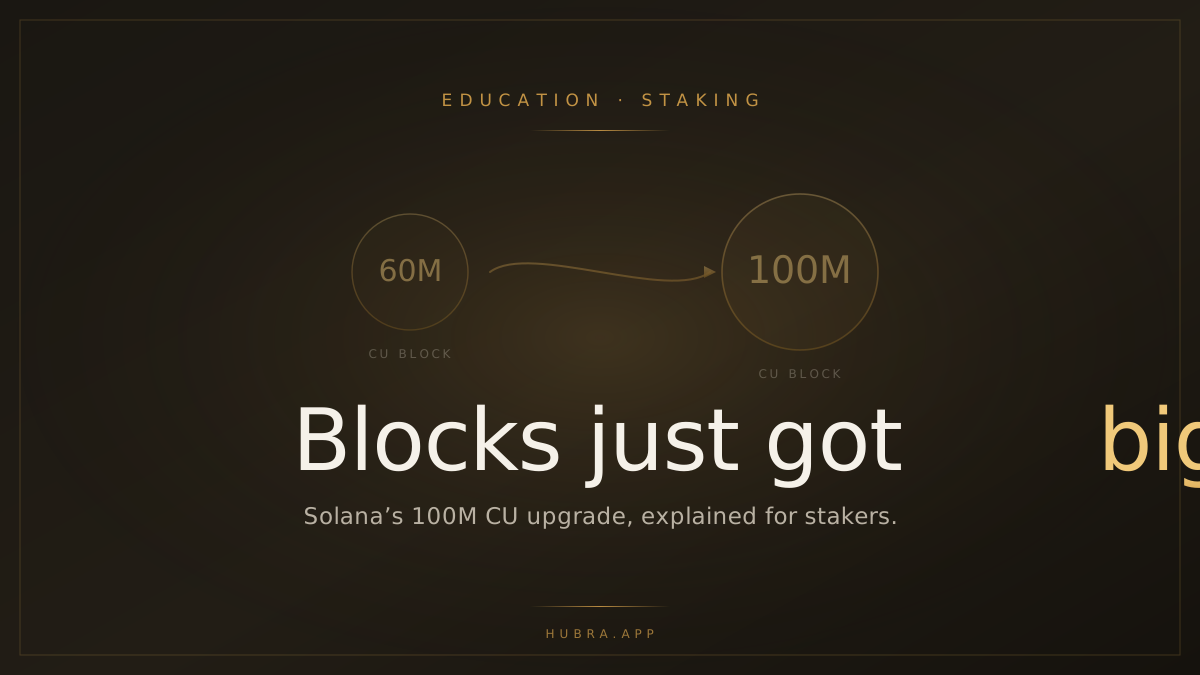
Solana blocks just got 66% bigger. SIMD-0286 raised the compute limit to 100M CUs on July 29. Here is why more blockspace quietly matters for staking yield.
 Education
Solana Alpenglow Activation: What Stakers Should Check Before September 28
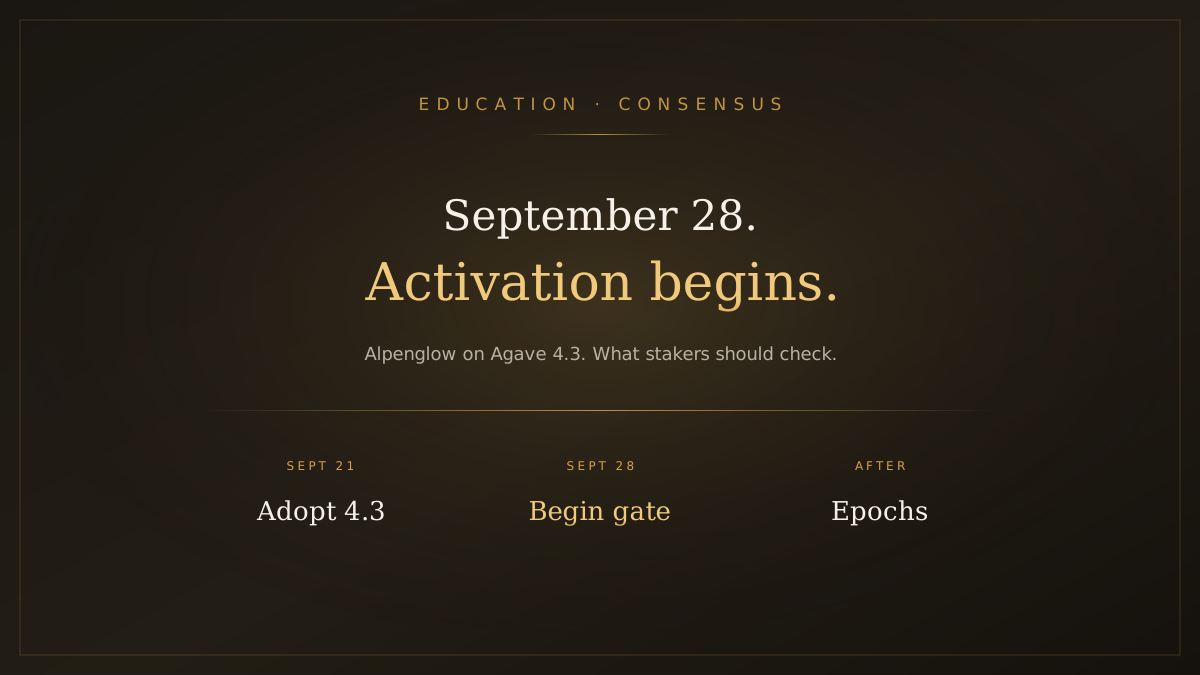
Alpenglow now has a provisional mainnet runway on Agave 4.3: general adoption September 21, begin feature activation September 28. A short checklist for stakers, not a republish of our earlier explainers.